The Invisibility Trap: Why Your “Perfectly Targeted” Ads are Getting Ignored
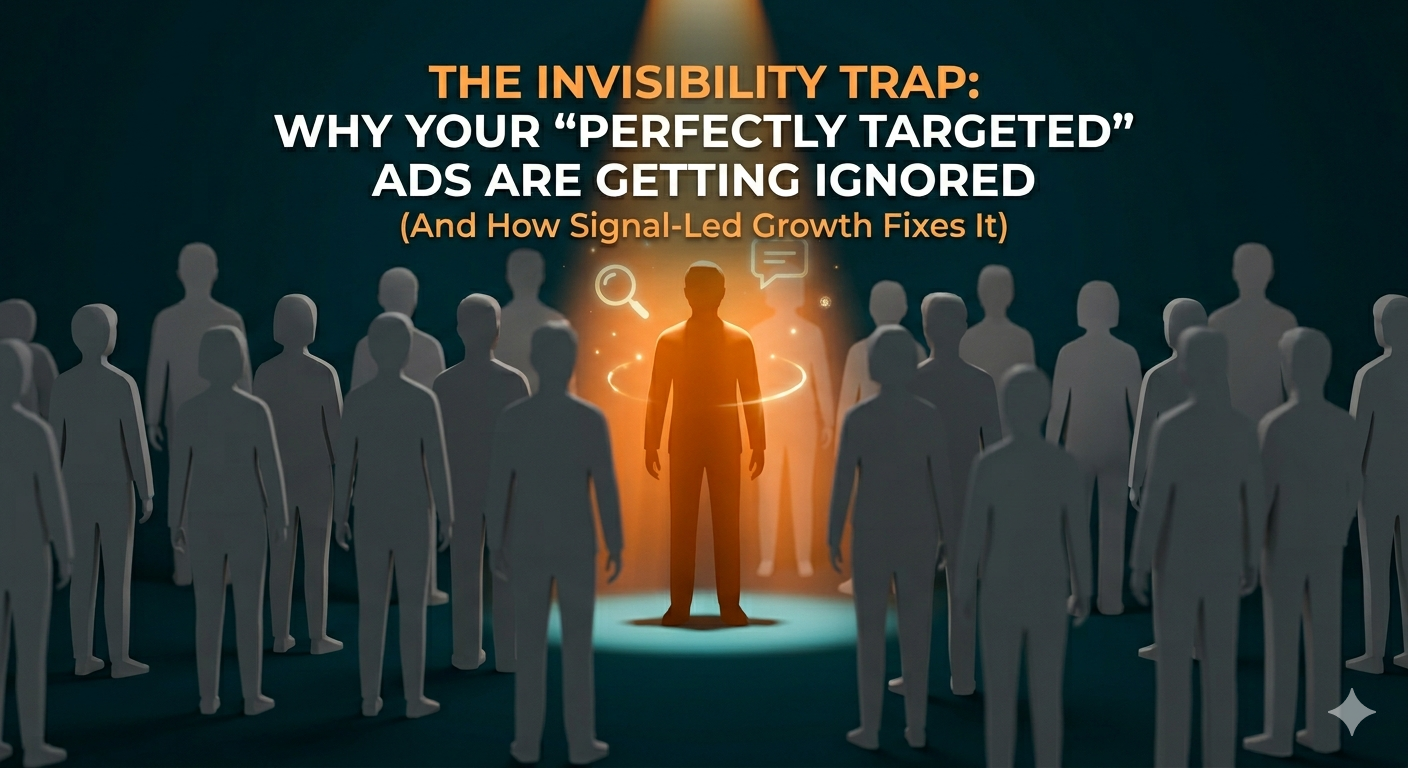
Let’s be honest: your audience doesn’t live in a demographic bucket anymore.
You can target “Females, 25-40, interested in wellness” all day long, but that doesn’t tell you if they are ready to buy or just doom-scrolling. In 2026, demographics are a ghost town. At a recent APIDM Performance Powerhouse meetup, Shahrana Fazal (VP of Global Growth at Enfection) dismantled the old way of thinking. Her message was simple: we have moved from the Social Graph (who you follow) to the Intent Graph (what you actually need right now). If you aren’t marketing to intent signals, you’re just making expensive noise.
The Problem: The “Demographic Trap”
Have you ever wondered why two people with the exact same profile—same age, same city, same job—react differently to your ads?
It’s because their context is different. “Targeting” usually ignores the human emotion behind the screen. Shahrana illustrated this using a powerful healthcare example:
-
User A searches for “symptoms of HPV” because they are scared. They need empathy and education.
-
User B searches for “HPV vaccine cost Colombo” because they are ready to act. They need pricing and a clear way to book.
If you send the same “generic brand ad” to both just because they share a demographic, you lose both. One feels misunderstood; the other feels interrupted.
The Framework: The Signal-Led Growth Engine
For those who couldn’t attend the session, here is the 4-step framework Shahrana shared. It’s the “secret sauce” for bridging the gap between data and actual impact:
-
The Signal: Stop looking at who they are. Look at what they are telling you. Every search query, the time of day they browse, and even the language they use (Sinhala vs. English) is a signal of their current mindset.
-
Intelligence: This is the “So What?” layer. It’s about mapping signals to psychological states. Does a specific language choice signal a need for trust and local familiarity? You must translate raw data into human insight.
-
AI as the Multiplier: Don’t fear the algorithm; feed it. Whether it’s Meta’s Advantage+ or Google’s PMax, these tools are “signal-hungry.” When you give them high-intent data instead of broad interests, they find your customers faster and cheaper.
-
The Signal-Led Brief: This is the game-changer for creative teams. Instead of writing a brief for a “person,” write it for a “moment.” When the creative resonance matches the user’s intent in real-time, the “ad” becomes a “solution.”
A Real-World Reality Check
Think about the Global Healthcare case study shared during the session. By simply identifying that English searches signaled “readiness” while local language searches signaled “anxiety,” the team was able to flip their ROI. They didn’t change the product or the budget; they simply aligned their message to the signal.
Your Next Step
We believe in skills, not just theories. You can apply this right now:
The Challenge: Look at your current campaign data. Find one search term or user behavior that doesn’t fit your “ideal customer profile” but is driving high engagement. Write one specific ad tailored solely to that unique signal. That tiny pivot is where your next phase of growth is hiding.
Ready to stop guessing and start scaling? The “Skills Over Credentials” era is here. At APIDM, our Performance Marketing and AI-Native Strategy programs are designed to teach you exactly how to build these signal-led engines.
Related articles