Influencer Marketing ROI: Why Trust Outperforms Reach
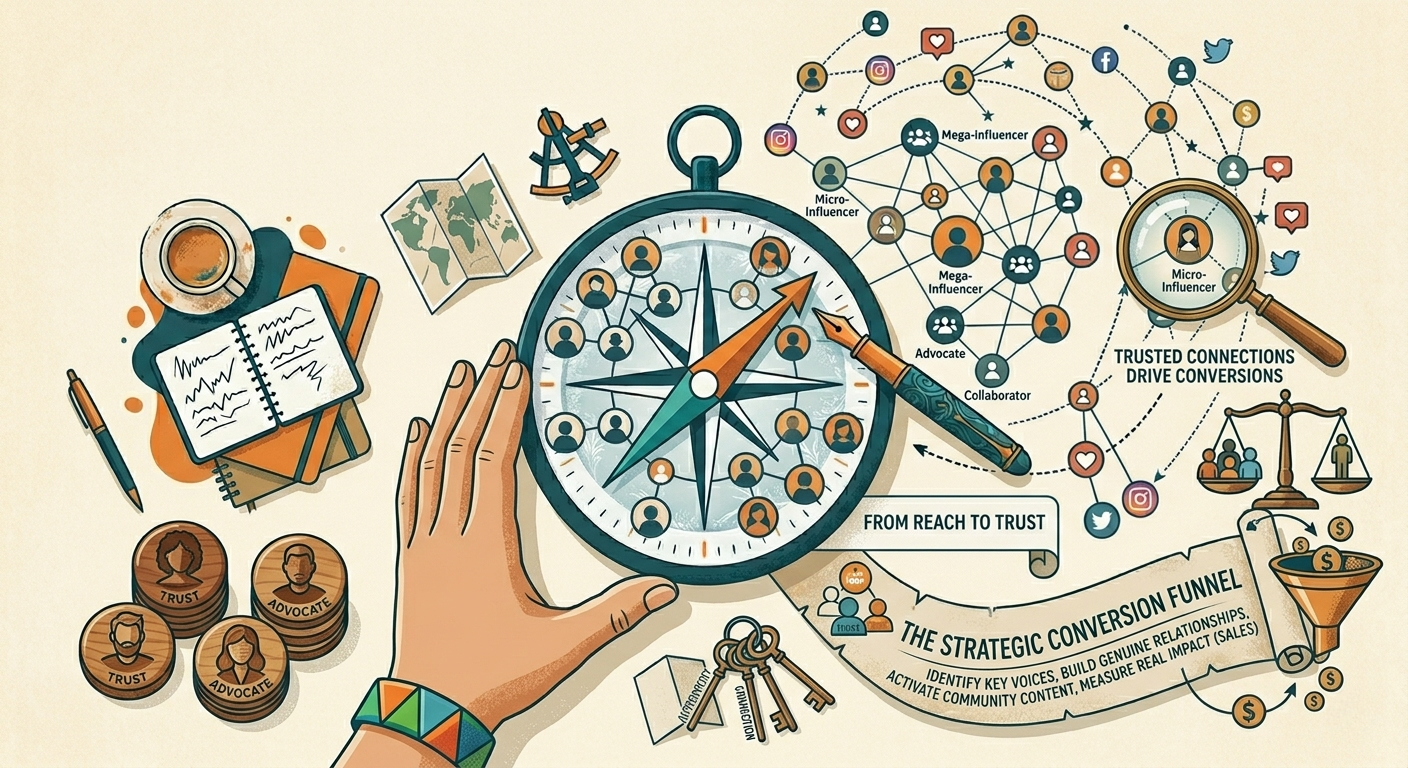
The Reach Paradox: Why Your $10,000 Influencer Campaign Just Flopped
Let’s be honest: there’s a specific kind of sinking feeling that happens when you check your dashboard after a major “celebrity” influencer post goes live. You spent weeks on the contract, thousands on the fee, and… crickets. You saw the likes. You saw the “fire” emojis in the comments. But the sales? Zero.
Have you noticed that the bigger the follower count, the harder it is to actually move the needle? It feels counterintuitive, but the data from thousands of campaigns confirms a harsh reality: You are paying for reach when you should be paying for trust.
In a world obsessed with “going viral,” most brands are making the same fundamental mistake. They chase the blue checkmark while ignoring the person actually talking to their customers.
The Math of Trust: Micro vs. Mega
When an influencer has millions of followers, their audience stops being a community and starts behaving like a crowd. In a crowd, people scroll past and double-tap out of habit. They aren’t listening; they’re just spectating.
The numbers reveal a striking divide in performance:
-
Micro-influencers (10k–100k followers): Deliver a 36% positive ROI on average.
-
Mega-influencers (1M+ followers): Lose money 59% of the time.
Why? Because a recommendation from a creator with 15,000 followers feels like advice from a trusted peer. A recommendation from a celebrity feels like a billboard. If you want to win, you have to go targeted, go trusted, and scale what works.
4 Pillars of a Profitable Influencer System
Stop treating influencer marketing like a one-off experiment. If you want repeatable results, you need a system. Here is the framework for turning “vague awareness” into “measurable profit.”
1. The Campaign-Specific Hashtag
Don’t just use your brand name. Create a memorable hashtag tied to a specific theme. This creates a searchable trail of social proof and allows you to track the “ripple effect” of your campaign across platforms.
2. The UGC Flywheel
Micro-influencers are essentially high-speed content creators. One partnership shouldn’t just result in one post; it should give you a library of User-Generated Content (UGC). These “messy,” real-life videos often outperform high-budget studio ads because they look like they belong in a user’s feed.
3. “Vibe-First” Briefing
The quickest way to kill a campaign’s ROI is to hand a creator a rigid script. If it sounds like an ad, people will skip it.
-
The Rule: Give them the goal and the key talking points, but let them use their own voice.
-
The Format: Encourage “Day in the Life” or “Problem/Solution” arcs rather than a standard product pitch.
4. Tracking What Matters
If you aren’t using UTM tagging links for every single creator, you are flying blind. Stop obsessing over likes. Instead, rank your creators based on:
-
Saves and Shares: The ultimate signal of interest.
-
Website Clicks: Showing active interest.
-
Sales: The only metric that pays the bills.
Moving Beyond Vanity Metrics
The “Invisibility Trap” happens when brands blend into the noise of the internet by being too polished and too broad. By shifting your focus to micro-influencers and authentic storytelling, you build a marketing engine that compounds over time.
Strategy without execution is just theory. Start small, find the creators whose audiences actually talk back, and double down on the relationships that drive revenue.
The shift from ‘reach’ to ‘trust’ is the biggest opportunity in digital marketing right now. Don’t get left behind – start auditing your current partnerships for trust, not just followers.
Related articles